Archive for the ‘Malawi’ Category

Canadian high school teacher will cycle from Cairo to Cape Town for the blind in Africa

Thursday, January 12th, 2012

Beginning January 14, 2012 Gizele Price, a high school math teacher from Mississauga Ontario, will cycle almost 12,000 km from Cairo to Cape Town in Tour d’Afrique to raise money to restore sight and prevent blindness in eastern Africa. The 4-month ride will end on May 12, 2012.

Gizele Price, Canadian who is riding to raise money for the blind in Africa

Gizele is hoping to raise $2 for every kilometre of the ride for Seva Canada’s eye care programs in eastern Africa, specifically, Malawi, Madagascar, Burundi and Tanzania. She has already raised  over $12,000 and she hasn’t even started yet!

“My father showed me a newspaper article about the need for cataract surgeries in Africa. It was a pivotal moment for me and I quickly committed to fundraising for Seva. Once I had made that decision suddenly my trip found the ‘heart’ that it was lacking,” said Gizele Price.

Blindness and visual impairment is one of the largest health disabilities in the world with 285 million people who are visually impaired, of which 39 million are blind but it’s solvable.  80% of  blindness can be prevented or treated, often with a 10-minute cataract surgery costing just $50. And in Africa, childhood blindness and low-vision caused by cataracts is up to 10x more prevalent than in Canada.

“Seva couldn’t have asked for a better ambassador than Gizele to start 2012, our 30th Anniversary year. Gizele’s amazing commitment to do this physically challenging ride, raising funds and awareness of Seva’s work, is unbelievable especially since she considers herself to be ‘a rider of average fitness… just a girl on a bike.’ She is much more than that to us at Seva. Blindness and poor vision keep people trapped in poverty but regaining sight and preventing blindness can transform their lives. Adults and children are able to go back to work or school and lead healthy, productive lives, entire communities have a chance at a better future. What Gizele is doing inspires all of us to take risks and live our dreams while making the dreams of others come true.” said Penny Lyons, Executive Director of Seva Canada. Restoring someone’s sight is the single most cost-effective health intervention to reduce poverty according to the World Health Organization.

The Tour d’Afrique (www.tourdafrique.com/tours/tourdafrique ) is a 94-stage race broken up into 8 sections. The daily stages average 123 km in length, and range from 80 km on rough terrain to more than 180 km on the best paved roads. Travelling through 10 countries in all, Gizele will cycle along the Nile past ancient temples, through the Sudanese desert, and up into Ethiopia’s rugged Simian Mountains. After crossing the Equator in Kenya, she’ll pedal past legendary Mount Kilimanjaro, to Lake Malawi, Victoria Falls, and along the edges of the magnificent Kalahari and Namib deserts, en route to the finish her ambitious and epic journey in Cape Town, South Africa.

Gizele Price riding for Seva to raise money for the blind in Africa

To help Gizele reach her goal of $2 for every kilometre ($24,000) for Seva Canada visit http:///www.bit.ly/Cairo2Capetown4Sight

To keep up-to-date with Gizele on her ride read her blog at http://jonah2africa.wordpress.com/

Seva’s 2011 AGM – Not your average AGM!

Friday, December 9th, 2011

Seva’s AGM at the Centre For Peace in Vancouver was a great success! Nancy Mortifee, Board Chair, did a fantastic job welcoming everyone and making sure the meeting ran smoothly.

Nancy Mortifee Seva Board Chair

Nancy Mortifee Seva Board Chair

Norm Grdina from Morrow & Co. provided our auditor’s report and gave Seva the thumbs up. We liked him so much we appointed them for another year as our auditor.

Retiring board member, David Hardouin, was thanked for his wonderful service. He will surely be missed but we’re sure he’ll still be involved and will hopefully drop by the office from time to time.

The other bittersweet farewell was to Paula Ford, our Products Manager who is retiring from Seva in June of 2012. She has been involved with Seva in one way or another for over 25 years. What will we do without her?! Not to worry though, we won’t let her leave without a proper send-off in the spring.

Unfortunately Dr. Mariano Yee from Visualiza Eye Care System, our partner in Guatemala, was unable to make it to the AGM as his visa didn’t arrive in time (just got it today!). Lucky for us, Dr. Marty Spencer, an ophthalmologist in Nanaimo, and a longtime Seva board member was able to fill in and tell us all about his recent trip to Tibet.

Dr. Spencer made the arduous journey to Yushu, a town in eastern Tibet that was devastated by an earthquake in April 2010. An eye camp was being held in Yushu and it was hoped that he could help upgrade the surgical skills of the only cataract surgeon in the city, Dr. Norbu Tzering. Marty gave us his first-hand account of his experience in Yushu along with some amazing photos. To read all about his time in Tibet visit http://bit.ly/tfB4eb

Dr. Marty Spencer sharing his trip to Tibet

Dr. Marty Spencer, Board Member, sharing his trip to Yushu Tibet

We were also wonderfully entertained by William Jans who shared his eastern Tibetan adventure seeing cataract surgeries at Kham Eye Centre in Dartsedo. William, a talented photographer and avid traveller hosts live presentations about his absurd travels, selling out theatres across Canada. Using humour, music and photography, William, dressed in a Tibetan Khampa (cowboy) hat and Chinese silk jacket, conveyed his experiences including a touching and inspiring story of 3 sisters who all travelled together to have cataract surgery. Stay tuned for William’s new show dates and visit www.wrjphoto.com And thank you to William for taking such great photos of the AGM as you can see in this blog!

William Jans sharing his Tibetan adventure

William Jans sharing his Tibetan adventure

Penny Lyons, Executive Director, provided an overview of the programs. In case you missed the AGM here are some of the details:

Penny Lyons, Seva Executive Director

Penny Lyons, Seva Executive Director

FUNDING

Seva has been expanding its funding base so that we are not reliant on any one source. We received a 5-year funding commitment from the Canadian International Development Agency, as well as funding from the Community Initiatives Program (CIP) sponsored by the Alberta Government.

GUATEMALA

Seva has been working with Visualiza, funding their pediatric programs and now will be working to expand their programs to the Department of San Marcos – a very poor area in southwestern Guatemala where very little eye care currently exists.

Laura Spencer, Seva Board Member selling Visualiza fundraising bracelets

Laura Spencer, Seva Board Member selling Visualiza fundraising bracelets

TIBET

Seva Tibet is providing eye care services in every Tibetan region of China and has become remarkably good at fundraising – this year alone they’ve received over $80,000 from embassies based in Beijing.

NEPAL

Seva Nepal is intent on reaching every underserved area in western Nepal and in the last 3 months has opened primary eye care centres in two new regions with more in the planning stages.

CAMBODIA

Seva Cambodia, with funding from G Adventures (formerly Gap Adventures) and Planeterra Foundation, are building Cambodia’s first primary eye care centre just south of Battambang in Moung Roussey which will be inaugurated in March. The ultimate plan is to build a new eye hospital there that will serve all of Cambodia’s Northern provinces.

EASTERN AFRICA

Seva is supporting programs in Tanzania, Malawi and Madagascar as well as outreach in Burundi.  A large portion of funding supports outreach and pediatric programs in each of these countries. In Madagascar, Seva donors are creating a nationwide pediatric program from the ground up.

One of the more innovative initiatives that our partner in Africa, the Kilimanjaro Centre for Community Ophthalmology, has begun is using existing microfinance networks to help deliver eye care and treatment information to rural communities.  So far, it appears that this program has been so successful that we have sent someone from Africa to Nepal to help implement the program there as well.

INDIA

Aravind Eye Care System in India is establishing Vision Centres throughout Southern India with Seva donor funding – each of which will provide eye care to about 65,000 of India’s rural poor.

Without you, our partners and supporters, Seva wouldn’t be able to do the work that we do, and this year’s AGM was a fantastic way to celebrate our successes, learn about the work that is being done, the work that still needs to be done and to spend some time together. Thank you to all our volunteers for making the AGM such a success. And thank you to all of you that continue to believe in a world in which no one is needlessly blind or visually impaired.

We look forward to celebrating our 30th Anniversary with all of you in 2012! The first event will be Beyond the Darkness a photo exhibition by Larry Louie an award-winning photographer and Seva Board member.  The exhibit will run from April 23-May 12, 2012 at the HSBC Pendulum Gallery in Vancouver with a reception on April 26th.  For full details visit www.seva.ca/anniversaryevents.htm

Nepalese Temple photograph by Larry Louie

Nepalese Temple photograph by Larry Louie

We hope to see you there!


Two Seva contributing photographers take 1st and 2nd place in CL!CK 3!

Friday, November 18th, 2011

Congratulations to Dr. Larry Louie and Paolo Patruno, two of Seva’s supporters and contributing photographers for winning  grand prize and runner up, respectively, in the 3rd edition of the CL!CK ABOUT IT (CL!CK 3) international photography competition. Organized by the European Journalism Centre (EJC), Oxfam International, and the European Commission, the competition had more than 250 participants.

The topic of the photo competition was “Aid,” specifically: how aid is changing the local community; what kinds of activities and campaigns in developed countries are being carried out to “aid” the less/least developed world. What a fitting topic for both Larry and Paolo to showcase their amazing documentary-style humanitarian photography.

The grand prize was awarded to Larry Louie because he was the photographer who best showcased the “story-telling” of photojournalism. “His photographs show the strength and perseverance that mark people the world over, revealing the light sometimes found in dark places” (Larrylouie.com). Larry won the opportunity to go on a reporting trip in early 2012 to a number of Oxfam-run projects.

Larry Louie winning photo in CL!CK 3 photo contest

Larry Louie "Courage."

Paolo Patruno was one of only 3 runners-up and won a 500 Euro Amazon gift card. His amazing photographic work for Seva in Malawi was a part of his entry and focused on the activities at the Lions Sight First Eye Hospital in Blantyre.  The program focuses mainly on children with cataract providing appropriate treatment including surgery, follow- up and provision of prescription glasses. www.paolopatrunophoto.org

Little Malawi boy receiving cataract surgery" CL!CK 3 Paolo Patruno photo

Paolo Patruno "I will see my future."

Seva is so fortunate to have such talented, award-winning photographers who are able to capture the people and the work that we do in such an engaging, honest and impactful way.

Congratulations!

Delta Optical gives the gift of sight to children in eastern Africa for World Sight Day

Monday, October 3rd, 2011

This October, Delta Optical will be donating $30 from every pair of eye glasses sold towards pediatric eye care in Tanzania, Malawi and Madagascar where cataracts are one of the leading causes of blindness in children.

Thursday October 13th is World Sight Day and Delta Optical is dedicating the entire month of October to this campaign in support of Seva Canada’s eye care programs in eastern Africa.

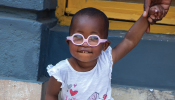
Malawi boy smiling in new glasses

© paolopatrunophoto.org

Childhood blindness and low-vision caused by cataracts is up to 10x more prevalent in Africa than in Canada. A 15-minute life-changing eye operation for a child blinded by cataracts prevents an average of 50 years of blindness and allows a child to go to school, play with friends and reach their full potential.

“I wanted to create this program because it is the right thing to do. I’m originally from Tanzania and have seen children who have had many disadvantages but everyone should have the right to sight. I am so fortunate to associate myself and business with such a fine organization as Seva. This is our second year of involvement and I hope that we have this opportunity for many years to come,” said Zaf Khalfan, owner of Delta Optical.

Childhood blindness and low vision affects entire families and communities for generations and drives families deeper into poverty. Giving the gift of sight is one of the most cost-effective ways to reduce poverty according to the World Health Organization. Childhood blindness and low vision are most often preventable or treatable with early identification, adequate follow-up care and low vision services.

All four Delta Optical locations in Mississauga, Oakville, Toronto, and Richmond Hill will be participating in the fundraising program (www.deltaoptical.ca). The funds raised will help to restore sight to some of the 300,000 blind children in Africa and give them, their families and communities a brighter outlook on the future.

Thank you to Zaf Khalfan and Delta Optical for this random act of Seva, 2 years in a row!

Fighting childhood blindness in Malawi

Friday, September 9th, 2011

Malawi is one of the poorest countries in the world and has a population of approximately 13 million people, of whom 50% are children. For children in Malawi, congenital and developmental cataracts are the leading causes of blindness. Every year approximately 120-180 children are born with congenital cataracts or they develop cataracts; moreover, there is a backlog of over 600 children who need urgent eye care.

Childhood blindness is one of the five priority diseases that have been targeted by the VISION 2020 initiative. The Childhood Blindness Program in Malawi is dedicated to reducing childhood blindness through early identification of children with visual impairment, providing appropriate interventions, and follow up.

Surgeon applying eye patch to child after cataract surgery in Malawi

A child receives an eye patch after cataract surgery in Malawi. Photo from July 2011 courtesy of Paolo Patruno.

One of the many challenges of childhood blindness is finding and identifying children with vision problems. Childhood blindness often goes unnoticed because children cannot speak for themselves about their poor vision so parents are unaware of it. In addition, parents themselves are more concerned about the general health of their children rather than their eyes.

Thanks to Seva donors, from Jan 2010 to June 2011:

  • 247 health workers and volunteers have been trained to seek out children with eye problems
  • 6,692 children have had their eyes examined
  • 207 children had cataract surgery to restore their sight, split as 119 boys and 88 girls
  • All the children who received surgery were provided with special pediatric lens implants

The ripple effect of surgery for the 207 children will be felt for generations. Those children will now be able to play with their friends, go to school and eventually earn a living; their families will no longer face the economic, social and emotional burden of caring for a blind person. Each operation prevents an average of 50 years spent in blindness, so these 207 eye surgeries have prevented 10,350 years of blindness.

FOLLOW-UP CARE AND GLASSES

Follow-up care and the provision of glasses is an important part of fighting childhood blindness. In the period, 89 children received prescription glasses. Seva is grateful to Canadian optical companies like OGI Canada Inc. for donating children’s frames. We have subsidized transport for all children who came for cataract surgery, follow-up, surgery, and to collect spectacles. Seva is working to provide low vision care for the approximately 13,000 children with low vision.

Join us in bringing eye care to Malawi’s children. Donate to Seva.

See the blog post with more of Paolo Patruno’s photos of the projects in Malawi.


Italian photographer Paolo Patruno captures Malawi childhood blindness program

Monday, August 22nd, 2011

Paolo Patruno is an Italian photographer specializing in social and humanitarian work. Paolo shoots photographs and videos of NGO projects in order to tell their stories and to spread the word about their missions and activities. He says, “My main aim in photography is to use my images to support the most vulnerable people.”

In July 2011, Paolo was living and working in Lilongwe, Malawi for an Italian NGO when he learned of Seva’s local eye care programs. He emailed the Seva Canada office in Vancouver and generously offered to take photographs of the work being done in Malawi to fight childhood blindness.

In August, Paolo spent time visiting the eye care programs and took 1000 photographs of the patients, young and old, the doctors, nurses and volunteers.

child cataract patient in Malawi photo by Paola Patruno

Child cataract patient in Malawi. Photo by Paola Patruno.

Our sincerest thanks to Paolo for his random gift of Seva and the amazing photographs that visually tell the story of the Malawi program and people. .

To learn more about Paolo and to see his other work visit www.paolopatrunophoto.org/Home.html

Here’s an interview by Seva with Paolo and a selection of his amazing images.

Seva: Why did you decide to visit Malawi?
Paolo: I was in Malawi for 4 months working for an Italian NGO.

Seva: What did you find inspiring about the Seva program in Malawi?
Paolo: We always know from newspapers and television about the major issues that afflict almost all the African countries — poverty, HIV/AIDS, disease and malnutrition — but very few listen about blindness. As with most of health issues, people affected with vision problems could be effectively treated with early identification and adequate follow-up care services. On the opposite, childhood blindness and low vision affects families driving into deeper poverty.

Seva: Of all the photos that you took, which one is most meaningful to you and why?
Paolo:
The most meaningful photo I took is the one portraying a young patient and the anesthetist waiting in the operating theatre during a power cut (see the photo below). All of the operations, both the ones in progress and the new ones scheduled to start were stopped for more than 40 minutes, because of a power cut on the line of the theatre. It took a long time to switch manually to the generator.

Electric power cuts are now a big problem in Malawi and they take place daily. The problem is getting worse because of the lack of diesel fuel for generators.

eye surgeon waits with child cataract patient during power cut in Malawi

An eye surgeon waits with child cataract patient during a power outage in Malawi. Photo by Paolo Patruno.

Seva: Are there any stories about the work you saw or your time in Malawi that you’d like to share with us?
Paolo: During my stay in Malawi, I developed different photographic projects on health issues both for NGOs and hospitals. It doesn’t matter if we are dealing with disability, blindness, or mother and child mortality — the main thread running through all of these situations is that the lack of prevention leads the issue to become worse, most of all for the people living in rural areas far from any hospital or health centre. Lack of health facilities and, above all, health workers such as doctors, nurses and clinicians, makes these health issues even harder to prevent.

To sum up, in Malawi as almost everywhere in Africa, we can see small issues getting worse, as would never happen in most of the developed countries in Europe or North America. Because it is very difficult to witness these situations, all of us should give a contribution to help and support the most vulnerable people, especially children.

OGI Canada Inc. donates glasses to Seva programs in Africa

Monday, July 25th, 2011

Today we received 4 boxes containing 830 eyeglass frames from OGI Canada Inc.

Heather from Seva with boxes of glasses from OGIThis generous donation will be sent to the eastern African countries of Tanzania, Zambia, Malawi and Madagascar where there is little or no access to children’s glasses. They will be used as part of Seva’s childhood blindness programs.

Seva Canada and our partner in Africa, the Kilimanjaro Center for Community Ophthalmology, are extremely grateful to OGI Canada Inc. for their years of support in providing quality eyeglasses for children in eastern Africa. Over the last two years, OGI has donated 2,587 frames to Seva with a value of over $50,000.

OGI glasses for Africa

Here is a short video that acknowledges and thanks all those wonderful Seva supporters who have donated glasses and low vision devices, as well as shipping, for the pediatric eye care programs in eastern Africa.

It’s Week 37 in our Random Acts of Seva campaign to count down to our 30th Anniversary of restoring sight and preventing blindness. See more Random Acts of Seva.

Bike for Sight

Thursday, July 21st, 2011

cyclist in Cowichan ValleyTom Voss, one of Seva Canada’s board members, is kindly organizing Seva’s first ever Bike for Sight event to raise funds for life-changing eye surgeries for children in eastern Africa. It’s a random act of seva for week 39 in our countdown to our 30th anniversary!

We hope you’ll join us! Here are all the details:

When
Saturday September 17 2011 Online registration is open now. Check in at 9 a.m. and ride starts at 10 a.m.

Cost
Registration is $100 per person and you will receive a $65 tax receipt from Seva Canada. The ride ends with a celebratory BBQ sponsored by Thrifty Foods.

Where
62 km circle route in the beautiful Cowichan Valley of Vancouver Island

How you can help
1. Register online to join the ride
2. Support another cyclist through their online giving pages
3. Tell your friends and family about the event
4. Print off this poster and put it up in your place of work or community

Why
All proceeds will provide sight-restoring cataract surgeries for children in Tanzania, Burundi, Malawi and Madagascar. Read how your participation will fight childhood blindness in Africa.

Route
62-km circle route Depart from the Thrifty Foods parking lot in Duncan, at 2775 Beverly Street 2 km on city streets join the newly graded Trans Canada Trail for the approximately 28 km ride to Lake Cowichan. The ride is on the old E&N railway which has a gentle grade, and the majority of the trail runs under a lovely canopy of trees. At Cowichan Lake, the E&N trail joins the CP portion of the Trans Canada Trail the return trip to Duncan runs parallel to the Cowichan River, crossing beautifully preserved wooden trestles at Marie Canyon and Holt Creek. This 25 km section of the trip is mostly downhill on a gentle grade with lovely views of the river. At the Glenora staging area cyclists will be directed onto paved roads for the remaining 7 km downhill trip to Duncan. Hybrid bicycles will make the trip but mountain bikes would be best.

For more information please call the Seva office at 604-713-6622 or toll free 1-877-460-6622 Mon-Fri 8 a.m to 4 p.m. Pacific time or email admin@seva.ca


Fighting childhood blindness in Africa

Tuesday, May 10th, 2011

Seva Canada is working to reduce the prevalence of childhood blindness in eastern Africa.

As the causes of blindness in children differ from those in adults, different control measures are needed. In low-income countries, high proportions of children are blind from preventable causes, which require community-based interventions.

In all regions, children with treatable diseases, principally cataract, can have their sight restored.

blind African child trying to write before cataract surgery

Shamimu, age 5, is blind from cataracts and cannot see to do her schoolwork

Childrens’ eyes cannot, however, be considered smaller versions of adults’ eyes, and specific expertise and equipment are required. Unlike adults, children require longterm follow-up after surgery, to manage complications and to prevent amblyopia (‘lazy eyes’). The understanding and involvement of parents is critical. In all regions, children with irreversible visual loss must be assessed for low-vision services, early visual stimulation, rehabilitation or special education, depending on their age and level of residual vision.

Shamimu age 5 with bandaged eyes after cataract surgery on both eyes

hamimu after cataract surgery on both eyes to restore her sight

Seva Canada has launched a new fundraising campaign to restore sight to 250 blind children in Tanzania, Madagascar, Burundi and Malawi.

“This campaign will prevent 12,500 years spent in blindness, based on average life expectancy of 50 years,” says Dr Paul Courtright, co-director of the Kilimanjaro Centre for Community Ophthalmology in Moshi, Tanzania, Seva’s partner in Africa.

Giving the gift of sight is one of the most cost-effective ways to reduce poverty, according to the World Health Organization.

child in Tanzania after cataract surgery

Fully recovered from her cataract surgery, Shamimu is now keen to return to school

Some facts about childhood blindness in Africa:

  1. 300,000 children in Africa are blind and hundreds of thousands more have low vision
  2. Childhood blindness and low vision is most often preventable or treatable with early identification, adequate follow-up care and low vision services
  3. Congenital/developmental cataract is one of the leading causes of blindness in children and the incidence is 6 to 10 times more common than in Canada
  4. Childhood blindness and low vision affects families and communities for generations and drives families deeper into poverty
  5. One study places the global economic loss over 10 years of childhood cataract at between $1 billion – $6 billion
  6. By restoring sight to a child, you are preventing an average of 50 years of blindness and suffering

The cost of providing cataract surgery for a child and restoring his or her sight is $300 and includes:

  1. Screening of children in their communities
  2. Provision of specialized pediatric lens implants and other consumables for cataract surgery
  3. Provision of infant and children’s prescription glasses and low-vision devices
  4. Transportation to and from hospital
  5. Hospital costs and food for an average stay of 11 days
  6. Follow-up care and services

Learn how you can give the gift of sight to a blind child in Africa and change his or her life forever. Visit http://www.seva.ca/sevaintanzania.htm

Random acts of seva – soccer balls to Africa

Thursday, May 5th, 2011

In March 2011, a group of 16 Seva supporters and Seva board members traveled at their own expense to Tanzania and Malawi on a donor trip to see Seva’s eye care programs there.

The group spent time at the Kilimanjaro Centre for Community Ophthalmology in Moshi, Tanzania and also at Lions First Sight Eye Care Centre in Blantyre, Malawi.

“Our Seva Africa trip with its visits to rural eye clinics and hospitals presented many memorable moments,” said Carol, one of the trip participants. “I felt it was a privilege to be a witness to Seva’s work and can truly say that they live up to their mission statement To restore sight and prevent blindness in the developing word. I thank Seva for this opportunity.”

As a cute act of seva (service), some of the donors took a whole bag full of soccer balls and pumps and when the group stopped at schools and orphanages they handed out these very prized gifts.

Today we got the following message and these two photos from Malawi:

Dear Mr Charles & Donald,
It is my pleasure for this opportunity for writing to two of you gentlemen, hope you are doing well and I don’t know if you are back home  yet? Here at Mvuu Lodge we are still thinking of you people for the good time we had with you indeed we are missing you. I also attached you some of the photos which I took when handing over the footballs which you left with me for the school children’s and their teachers were very pleased for the donations,  they are all saying God Bless you all for the good job.
Hope to hear from you soon
Richard and the team

soccer balls to Africa from Seva donors

soccer balls to Malawi from Seva donors

To celebrate almost 30 years of Seva’s work, share your random acts of seva with us by emailing fundraising@seva.ca or joining our Facebook page and posting them there.

Greetings from Blantyre, Malawi

Tuesday, March 22nd, 2011

A special post from Nancy Mortifee, Board Chair for Seva Canada, who is leading a special self-funded donor trip to Tanzania and Malawi to see Seva’s eye care programs there.

Well, it has been quite an experience moving into Malawi. Due to a last minute cancellation of our flight from Dar, we arrived late in the evening the night before last. Our hotel, the Sunbird Mount Soche, is very beautiful and is a well recognized landmark in the city of 600,000.

Yesterday morning Ruby, the Childhood Blindness and Low Vision coordinator for Queen Elizabeth hospital met us at the hotel and we all set out for a day of Seva work. After a very informative presentation by Ruby and Gerald, the only pediatric ophthalmologist in Malawi, we toured the hospital, visiting with children and adults both in the wards and clinic areas. Pediatric surgeries take place on Mondy and Tuesday only, with approximately 1 surgery and recovery per hour. Some of the adolescent children opt for local anethestic and the youngest being 9 years old. Although this is often possible, there needs to be a  anethesist at the ready because of possible complications or a last-minute decision to use a general anethestic. Since the hospital shares an anethesist with several other districts there is always a backlog of up to 60 children waiting for surgery and treatment. With the ever-shrinking window of opportunity to restore the sight of a baby or very young child, this is a real problem.

The other issue is transportation. Gerald thanked Seva Canada profusely for having the vision to fund the training of informants and transportation costs for children and families, despite the fact that most funders prefer to contribute to surgeries only. It is clear that education, transportation and follow-up are the three areas of greatest need for the hospital, and indeed, pediatric services for Malawi in general.  Plans for outreach clinics are underway and it looks like it will take a while to get there. It’s clear that it’s a huge undertaking and we were all very moved by their dedication and health “warrior” energy. Thats’ surely what it will take.

This morning we go to watch a training for informants and then move on to Zomba Plateau.

Children’s eyeglasses bring sight to eastern Africa

Friday, November 19th, 2010

Vision problems and blindness in children are urgent matters. Without focused vision, a child’s sight will not develop properly.

In eastern Africa, there is a huge need for infant and children’s eyeglass frames. Although adult frames can be purchased, children’s glasses and especially infant frames are simply aren’t available at any cost.

Thanks to generous donors, Seva Canada has shipped thousands of children’s eyeglasses, children’s sunglasses and low vision devices to Tanzania, where our partner, the Kilimanjaro Centre for Community Ophthalmology, distributes the frames and low vision devices to children’s eye care programs throughout Tanzania and to other countries in eastern Africa such as Malawi and Madagascar. Other donors, such as ICROSS CANADA, have purchased special pediatric intraocular lenses (IOLs) that are used to replace the eye’s natural lens during cataract surgery for children and infants.

This video is a thank you to the generous donors of children’s eyeglasses. We hope that it will help give a picture of the impact of these glasses on the lives of children, their families and their communities.

Our heartfelt thanks to these donors for giving sight and changing lives of children in eastern Africa:

Peter Ash and Under the Same Sun Foundation
Michael Bohbot of Bo Optik Inc.
Bo-Optik Inc.
Guy Boucher of OGI Canada Inc.
Noel Brown of Roberts & Brown Opticians
Centennial Optical
Children’s Low Vision Project of BC
Jamila Freedman
Granville EYELAND
ICROSS CANADA
IVKO
Raimonda Kelly of Perfect Optical (Canada)
KLM Cargo
Lynn Langille of the Children’s Low Vision Project of BC
Pascal Leutwyler of World Wide Animal Travel
Bruno Mansueto of World Wide Animal Travel
Sara Moshurchak, owner of Granville EYELAND
Mountain Equipment Co-op
Dick Murao of KLM Cargo
OGI Canada Inc.
Perfect Optical (Canada) Ltd.
Roberts & Brown Opticians
Klaus Sebok, former owner of Granville EYELAND
Billy Willbond of ICROSS CANADA
World Wide Animal Travel

To learn more about how you can help restore sight and prevent blindness in eastern Africa, visit Seva Canada’s website at http://www.seva.ca/sevaintanzania.htm

Thank you to Seva volunteer John Hemmings for help creating this video.

Helping those with low vision in Africa

Wednesday, August 4th, 2010
African girl with low vision using a magnifier at school

Tanzanian boy with low vision using a magnifier at school. Photo courtesy of David de Wit

Next week, Seva will ship 122 special low vision devices such as magnifiers to Tanzania.

The equipment, worth $4,000, was generously donated to Seva by the Children’s Low Vision Project of British Columbia. We are very grateful to Lynn Langille, the Program Coordinator at the Children’s Low Vision project, and her colleagues.

The low vision devices are being sent to Seva’s partner in eastern Africa, the Kilimanjaro Centre for Community Ophthalmology, and will be distributed by KCCO to various eye care programs and blind schools in Tanzania and Malawi.

Normal vision is known as “20/20″. This simply means that the eye being tested is able to see an object at 20 feet as well as any eye with very good vision. If you have 20/60 vision, this means you can see at 20 feet what a person with good vision can see at 60 feet. If you have vision that is between 20/60 and 20/190, it is called being partially sighted or having low vision.

Children with uncorrected vision conditions or eye health problems face many barriers in life, especially in developing countries. Vision doesn’t just happen. A child’s brain learns how to use eyes to see, just like it learns how to use legs to walk or a mouth to talk. The longer a vision problem goes undiagnosed and untreated, the more a child’s brain learns to accommodate the vision problem.

Seva Canada’s vision is a world in which no one is needlessly blind or visually impaired and where those with unavoidable vision loss can achieve their full potential.

Thank you also to Air France – KLM Cargo and to Worldwide Animal Travel of Vancouver for once again shipping vital eye care materials to Tanzania.

African boy with low vision trying to read

African boy with low vision trying to read. Photo courtesy of David de Wit