Archive for the ‘Random Acts of Seva’ Category

Festival Cinemas president Leonard Schein brings more than great films to Vancouver

Monday, April 23rd, 2012

Jenny Uechi

Posted: Apr 22nd, 2012

Vancouver Observer

Stepping through the doors of Fifth Avenue Cinemas, a couple of movie buffs chat about a benefit screening for the homeless. No sign of Coca Cola or other bubbly soft drinks at the concession stand: just coffee, iced tea and fruit juice. Welcome to Festival Cinemas’ premier theatre. Along with The Ridge and The Park, Fifth Avenue Cinemas has shaped Vancouver’s film culture. The intimacy and thoughtful movie selection makes the Festival Cinema experience vastly different from the shopping centre mega-multiplexes that  have become the norm.

Festival Cinemas president Leonard Schein arrived on time, looking relaxed in a simple blue shirt and jeans. Schein’s  influence on Vancouver has been towering. His capital is social and cultural. In addition to being president of Festival Cinemas (which operates The Ridge Theatre, Fifth Avenue Cinemas and The Park Theatre), Schein is the founder of the Vancouver International Film Festival and is chair of the board of directors of the Canadian Cancer Society – and his work for charities and social causes is legendary.

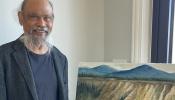
Leonard Schein photo by Jenny Uechi

Leonard Schein photo by Jenny Uechi

He spoke briefly about his recent “See Again” benefit screenings, which donates 100 percent of proceeds to Seva Canada, a charity that helps prevent blindness and restore vision to people in developing nations. The screenings were threatened by Consumer Protection BC regulations, until Schein spoke out strongly in the press, causing the regulators to back off and allow him to show his films.

The incident highlights Schein’s generosity toward charities and his tendency to speak out when he feels that something isn’t right.

A life transformed by film

Schein’s love of movies dates back to childhood in the 1950s. He was born in Los Angeles, home of Hollywood studios — but it wasn’t exactly a family tradition to go the movies on the weekend.

“My parents rarely went to the films. I think they did when they were single, but my dad worked six days a week as a truck driver. My mother was a housewife, busy with three kids,” he said.

His parents may not have been avid cinephiles, but he became one early in life. With a movie theatre just three blocks from his house, the young boy and his friends often visited to see the latest releases.

Schein’s eyes were opened to the power of foreign and independent movies  when he began studying at Stanford University. For a young man who had grown up watching studio films from the U.S., it was as though a whole new world had revealed itself to him.

“When I went to university, on campus, they used to show films every night – just 25 cents for students,” he said. And the 1960s was a golden age for foreign film directors, with legends like Fellini, Kurosawa and Bergman at their peak.

“Film allows us an exposure to another culture, another country more easily than any other medium,” Schein said. “Of course, books do it as well, but if you read, you imagine what someone looks like, or where a beautiful nature scene takes place. But with movies, you actually get to see the physical space of another country.”

The war in Vietnam – something that Schein had strongly opposed – brought him to Saskatchewan for two years, then westward to Vancouver in 1973. Even though he was working in education at that time, he immediately noticed the lack of options in the city for movie-goers.

“We had two chain theatres here, Famous Players and Odeon Theatres at that time, and they only showed Hollywood studio films,” he said. “This was before video, and you just couldn’t see many great films in Vancouver.”

Independent theatres like The Rio on Commercial Drive were showing Chinese and Asian films at the time, but for a culturally specific market.

Schein made a leap of faith and took over The Ridge  in Kitsilano in 1978 – a risky move for a man who had spent much of the last decade teaching psychology at various post-secondary institutions, including Capilano College, Douglas College and Vancouver Community College.

“It was hard to leave teaching college,” he admitted. “You’re tenured, you have summer vacations, it’s steady.” He nevertheless put down $35,000 for the theatre to realize his goal of bringing great films to audiences in Vancouver.

And his gamble transformed Vancouver’s film culture.

A “genius” for knowing what people like

Under Schein’s direction, The Ridge not only survived, but flourished – it showed movies that no other theatre in the city did.

Art Hister, a physician and prominent media personality who has corresponded for CBC Newsworld and BBC Radio 5 as well as CKNW Newstalk, remembers. Hister’s friendship with Schein goes back 40 years, and he has worked alongside him on the executive board of the Vancouver International Film Festival for years.

“When Leonard had The Rocky Horror Picutre Show at The Ridge, it was an amazing thing for Vancouver… it just changed the nature of film-going for a lot of people,” he recalled.

“He used to play it late at night. People dressed in costumes from the movie, recited the whole script. It was a phenomenon. The lineups were around the block. Vancouver is not the funnest city in the world sometimes, but Leonard provided a fair bit of fun.”

With the success of The Ridge, Schein bought more theatres and established the Vancouver International Film Festival in 1982.

Alan Franey, director of the Vancouver International Film Festival who was manager of The Ridge at the time, said,  “There was a film society here before, but it wasn’t as popular – it was more a high culture thing, like going to the opera. When Leonard came here he could see the city was lacking in cultural offerings and entertainment. He had a good sense that there was a business opportunity.”

“This was not a business in which you got rich – you have to make some pretty good choices just to stay alive,” said Hister, joking that if he ran a theatre, it would have “gone bankrupt in six weeks” because of his obscure movie choices. “But Leonard has a genius for figuring out what people like. His interests are all over the place.”

Asked about his favorite films today, Schein’s answers reflected his eclectic taste: he liked Salmon Fishing in Yemen as well as The Artist, enjoyed German dance documentary Pina and praised Iranian drama A Separation. He had also seen The Hunger Games when it first came out. Pressed for a favorite genre or era of movies, Schein shrugged. “I just like good movies.”

Generosity stemming from humble roots

As Schein’s theatre thrived, so, too, did the communities he invested in. For the past 34 years, Schein has held frequent benefit screenings to raise money for various causes – they range from street homelessness to environmental organizations to girls’ education. He also gives generously to local arts festivals, such as the Vancouver International Fringe Festival. 

“He’s an amazingly generous person with his space and his time and his money,” said Hister. “You take a group like Doctors Without Borders — I bet there are few people in Vancouver who support them more actively and with a greater generosity than Leonard.”

So what drives him to constantly do work to benefit the community? Schein paused to search for an answer, as though he were being asked something that needed no justification.

His support for social causes isn’t any particular family teaching he inherited, or the result of some life-changing incident. It just seems like the right thing to do, he said.

David Jordan, director of the Vancouver International Fringe Festival, noted that Schein was the organization’s “top donor” and a longtime supporter of Vancouver’s independent arts scene.

“I see Leonard everywhere I go and it’s often at cultural events off the beaten track,” he noted. “His involvement starts with the fact that he has a real appetite for the amazing variety of events that make up the culture of our city… I think we need more people like him in (Vancouver).”

A deep-rooted desire for social justice

In addition to Schein’s generosity, he’s also known as outspoken critic of many federal government policies, including Canada’s sale of asbestos to developing countries. Franey described him as someone who “knows he needs to stand up for what’s right.” He recently spoke up strongly to the BC government about The Rio’s right to screen movies after it was granted a liquor license (the BC Ministry of Energy and Mines has since introduced a policy change to accommodate the sale of alcohol in the theatre).

“We really appreciate someone like Leonard who has been in the industry a long time…for him to speak out helps the rest of us,” said Rio owner Corinne Lea. “When Leonard gets involved, it gives the whole issue a lot of credibility.”

Supporting and giving a voice to social justice is something that has shaped Schein’s actions long before he entered the business world, however. As a student during the 1960s, Schein was an active supporter of the Civil Rights movement and opponent of the Vietnam war – his refusal to take part in the conflict led him to move to Canada in the first place.

“I felt very strongly about the war in Vietnam,” he said. “While it was going on in the U.S., I thought, ‘we’ve got to treat people better’.”

Schein doesn’t elaborate much about his childhood, but makes quiet references to his brushes with discrimination and inequalities from the past.

“I’d once wanted to join a boys’ club,” he recalled. “But they wouldn’t let me. They told me they were a ‘Christian boy’s club’” — in other words, Jewish boys were not allowed.

Hister said that Schein had a very similar upbringing to himself, removed from privilege and entitlement.

“We know what it’s like not to be rich, to be lower-middle class, to do without,” Hister said. “If you’ve grown up knowing how difficult life is…I think that colours your world. You realize there’s lots of other people like that, and you want to help them in any way you can.”

“If you want to understand Leonard, you have to understand the sort of hardscrabble Jewish LA working class side of the family then you also have to see the idealist hippie-era, progressive idealist,” said Franey.

“There’s two very different sides of Leonard that are both at play. He is a very generous person in a lot of ways. With The Ridge, the spirit of idealism there in first days was that success of theatre was pretty tremendous.”

A balanced businessman and family man

Franey believes that Schein has been successful because of his delegating skills and ability to trust his staff.

“He was a real pleasure to work with because I always felt that he wasn’t looking over my shoulder,” he said. “He may be mistrustful of the world at large and I think he is politically active that way. But with people he knows and trusts, he’s very inclusive and very trusting.”

“He balances work and play better than most people I know,” continued Franey. “He finds time for his family and peace of mind and yet he works really hard. He accomplishes a lot during the day.”

“He’s a family man … The family man aspect involves not just a sentimental side but also the practical aspect to make sure you build a strong and secure world for the people you care about,” said Franey.

Hister said that Schein was the “best father he knew”, and in between running Festival Cinemas and serving as president of the Vancouver Jewish Film Festival, consistently carved out time to be with his son and daughter.

“And they’ve turned out to be great kids,” Hister reflected. “No matter how busy he was, he always made time to be with them.”

The difficult survival of independent theatres in Vancouver

As successful as Festival Cinemas has been, running a movie in Vancouver today is a huge challenge. In addition to the sky-high rent, the availability of cheap movies on NetFlix makes it extra difficult to bring in customers like before. What’s more, even the historic Ridge theatre is expected to close down this year, to make room for a $60-million development plan by Cressey that includes about 50 condominiums and a 22,000-square-foot grocery store.

Schein expressed concern that theatres – not just his own, but others in town – were being threatened with closure.

“When you lose a movie theatre, you lose much more than just a theatre,” Schein said. “A theatre gives jobs to people in the neighbourhood, it gives people in the area access to films. You lose the benefits of holding screenings for people in the community.”

He said the solution to keeping independent theatres open is to give incentives, which means help from the City.

“You have to make it so that a developer  makes more money by keeping a theatre, rather than having no movie theatre,” he said.

He explained, for example, the situation with Vancity Theatre, in which developers were granted special permission to build more condos in another property in exchange for building a theatre there.

Today, an empty store (formerly Meinhardt supermarket) stands ominously next to The Ridge. On weekday evenings, the gloriously retro interior of the theatre has become much quieter than it once was. Unless the public or City Council steps in, this iconic theatre will be gone from the public landscape.

And yet the impact of Schein’s first theatre will continue to live on. Vancouver — now known as Hollywood North — is home to a thriving foreign and independent movie scene these days. There are some 50 film festivals in town (Vancouver Serbian Film Festival and the Vancouver Asian Film Festival among others). All of these changes may seem to have sprung about organically, but much of it could not have happened without Schein’s work to bring more diverse films to the public.

“Vancouver has a good cultural scene, but it could always use more,” Schein said. “Culture is what makes a city important.”


Storytellers and musicians in Nanaimo give sight through Seva

Thursday, March 15th, 2012

On Friday March 9th in Nanaimo, BC, the Around Town Tellers held a benefit concert for Seva’s eye care programs in the developing world.

The evening was called “The Trees Are Calling: Stories of the Wildwood”and featured stories by Sandy Cole, Rachel Muller, Margaret Murphy, and Laurie Peck, and music by Terry Mack. The Around Town Tellers hosts “Stories on Friday” on the second Friday of each month from 7:30pm to 9:30pm at the Unitarian Hall, 595 Townsite Road in Nanaimo. Tickets are 5.00 at the door.

Dr Marty Spencer giving a talk for Seva at Around the Town Storytellers

Dr Marty Spencer speaking about Seva's work. Photo courtesy of Kathryn Maurer

Dr. Marty Spencer, ophthalmologist, Seva board member and overseas volunteer, gave a 10-minute talk on Seva’s work in which he presented the human tragedy of blindness in the developing world and what Seva does to make a difference.

The evening raised $400 for Seva’s sight programs. All those who made a donation of $10 or more to Seva received a complimentary copy of Telling Tales on the Rim by Gabriola author Naomi Wakan. Seva is very grateful to everyone who made the evening a success and to Naomi for donating her books! The funds raised will restore sight to 8 blind people through cataract surgery.

Seva is honoured and blessed to have so many wonderful supporters doing different things, large and small, to give sight to those in need. These “random acts of seva (service)” range from holding concerts, to hosting bread-making lessons, to plant sales, to cycling from Cairo to Cape Town in Africa.

If you want to join the Seva community and make a profound difference in the lives of individuals and families by helping Seva restore sight and prevent blindness, please contact the Seva Canada office in Vancouver at 1-877-460-6622 (toll-free) or email Heather at fundraising@seva.ca. There are a myriad of ways that you can help and every small act has a great ripple effect.

boy with eye patch thanking

A young boy with an eye patch after surgery says 'Namaste' and thank you for his restored vision. Photo courtesy of Dr. Marty Spencer.


Meaningful gifts to charities like Seva Canada are preferred for the holidays or any occasion

Tuesday, November 8th, 2011

Giving a gift that gives back, also known as alternative giving, is gaining in popularity. Rachel Zoe, fashion stylist and reality star, asked guests to give to charity in lieu of baby shower gifts and even Prince William and Kate Middleton asked guests to donate to charity instead of buying wedding presents.

An Ipsos Reid poll conducted on behalf of World Vision in 2008 showed that 8 out of 10 Canadians would rather receive something meaningful and memorable, with healthcare topping the list as one of the greatest human needs in the world today.

Whether it is for a birthday, a wedding, a baby shower, a memorial or the holiday season, alternative gifts benefit everyone: the gift giver feels good about supporting a cause that he or she cares about; the recipient gets a distinctive gift with a feel-good component; and the gift benefits an individual, family or community in need.

While we might not all have as much as the Duke and Duchess of Cambridge, most of us have more than we need. So much so that we have TV shows focused on our consumption like HGTV Canada’s Consumed. With the holiday season fast approaching, a time that epitomizes our consumer culture, 51% of respondents said that they would be more likely to give a charitable gift as a holiday present according to a 2010 study by World Vision.

“We certainly didn’t need more ‘stuff’ when we got married, so we invited our friends to make a gift to Seva’s work in Tanzania instead,” said Maggie Leithead, President and Chief Executive Officer of CharityVillage. “It made our big day even more meaningful to know that our celebration will have lasting, positive ripples on the other side of the world. It’s wonderful that Seva and other organizations are making these opportunities available.”

2011 Seva Gift Of Sight charity gift cataloge

“This information is a welcome confirmation of what we have seen at Seva Canada. Our annual Gift of Sight Catalogue which outlines all the various ways people can support our programs and restore or prevent blindness in the developing world, has been gaining popularity year over year. The catalogue makes it easy for people to give a meaningful gift especially during the holidays when schedules get even busier. People can choose which program in which country they want to support. All recipients receive a card from Seva and the gift giver explaining how the money will be used and a story of someone who has had life-changing surgery to restore their sight,” said Penny Lyons, Executive Director of Seva Canada.

A donor wrote to us this week, “When my cousins’ wife passed away recently, I wanted to send the family a lasting gift as a memorial to the creative, artistic soul that she was. Through a donation to Seva I could give a gift of sight to a person in Tibet.  A bouquet of flowers is lovely for a time, but this gift lives on. This gift as a memorial to her is a celebration of life and I know she would approve.”

Giving brings happiness according to recent research at UBC.  “Our research has shown that, contrary to most people’s intuitions, spending money on others – in the form of gifts or donations to charity- leads to higher levels of happiness than spending money on oneself,” said Lara Akin of UBC’s Psychology Department.

Seva Canada’s Gift of Sight catalogue can be viewed online at seva.ca or a printed version can be requested by contacting admin@seva.ca


Love it, list it and sell it for Seva

Friday, October 7th, 2011

Here’s a great story about a random act of seva (service) and the sale of a great car for a great cause.

Dr. Peter Glassman decided to sell his much-loved 1999 Mercedes ML320 and donate all the proceeds from the sale to Seva. The car was special to him and his family because he had spent many happy hours in it commuting with his daughter to school and work. Those early mornings in “the clubhouse” were cherished father/daughter bonding time.

Most cars donated to charity through “car donation” programs fetch a very small amount of money – roughly $100 according to one Vancouver car donation service. These cars aren’t resold to new drivers, but are sold for scrap.

Peter chose Seva to donate to because he feels very close to Seva Canada’s mission to restore sight and prevent blindness. Last year, Peter had his own brush with blindness when he suddenly lost vision in his good eye due to a serious retinal problem.

The eminent Vancouver ophthalmologist and retina specialist, Dr. Michael Potter, performed the critical eye surgery. After the operation Peter had to spend one week lying face down, immobile, as part of the post-operative healing process. It was a nerve-wracking seven days waiting and not knowing whether he would be able to see again with that eye and do all the things that he loved, like read and write.

“Dr. Michael Potter and Vancouver General Hospital saved my vision,” said Dr. Glassman. “We’re so fortunate to reside here. But who helps others who live under radically differing conditions?”

“I feel intensely drawn to helping Seva with its sacred work, but don’t have the capital to tender the kind of significant and ongoing monetary support I’d like to give,” said Dr. Glassman. “I’ve loved my sturdy loyal car, but wanted to simplify our lives and downsize our outlays. It feels wonderful that the automobile I’ve so enjoyed can bring in its next incarnation relief and joy to people in need.”

Yesterday Peter’s car sold in BC for $3,300 and his gift to Seva will provide sight-restoring cataract surgery to 66 adults in some of the poorest regions of the world such as Tibet, Nepal and Cambodia.

The car was sold thanks to the generosity and kindness of Jerry Mavroudis and the team at Richmond Chrysler Dodge Jeep Ltd.  who offered their services free of charge to show the car to potential buyers after it was advertised on Craigslist. Everyone at Richmond Chrysler Dodge Jeep Ltd. were remarkably concerned, generous, and effective. The dealer’s mission is to “constantly strive not only to meet their customers expectations, but to exceed them”. You did! Our deepest thanks to Jerry Mavroudis, General Manager Mike Gignac and the whole team.

Thank you, Peter, for your act of kindness and compassion and for bringing sight to so many.

Your story is an inspiration to all of us to look at our possessions in a new way and perhaps one day sell them and donate the proceeds of the sale to Seva Canada.

You can learn more about Seva’s work and ways of helping Seva restore sight to people who are blind by contacting Heather Wardle at fundraising@seva.ca or calling toll-free at 1-877-460-6622.

Steve Jobs, one of the world’s greatest visionaries & an original Seva supporter

Thursday, October 6th, 2011

Steve Jobs (1995 – 2011) changed the world from how companies market and package their products to how we interact, do our work, and entertain ourselves. He was a brilliant leader who brought everyone along on his amazing journey of innovation.

But did you know that Steve Jobs was one of the first Seva supporters?

Seva was inspired by the global eradication of smallpox that took place in the mid-1970s. Dr. Larry Brilliant (currently President of the Skoll Global Threats Fund) and his wife Girija, a public health specialist, had both worked with the World Health Organization (WHO) on the eradication effort in India and had been deeply moved by the experience. The effort resulted in the unprecedented total elimination of smallpox, a devastating disease.

Prior to Seva being formed, Dr. Larry Brilliant and Girija published an article, Death of a Killer Disease, on their personal account of their decade in South Asia as travellers and as part of the WHO’s smallpox eradication team. The article concluded with an appeal to readers to find the compassion and understanding to support international health problems to benefit those struggling with poverty.

Readers were so moved by the article that donations totalling $20,000 began to arrive to the Brilliant’s mailbox – with the first $5000 donation coming from the not-yet-famous computer inventor, Steve Jobs.

old Seva Nepal photo 2 women namaste

Steve’s compassion and generosity did not end there. When Seva created the first fellowship to plan and set up the Nepal blindness project, it was Steve Jobs who helped to fund it. He also inspired Dr. Brilliant to start his own technology company to help fund Seva’s programs.

Seva’s tagline at the time, from the Hindu spiritual teacher Sri Aurobindo, perfectly summarizes this melding of technology and charity -“Intellect in the service of the heart, technology in the service of compassion.”

Steve Jobs will be missed but his legacy of innovation and compassion will not only be remembered and enjoyed by billions but will inspire generations to come.

Seva fan retires from the military and fights blindness

Monday, October 3rd, 2011

One of our long-term Seva donors, Major Heather Dunbar, retired from the Canadian military last week and used the occasion to fight blindness.

In lieu of a retirement gift, Heather asked for a donation to be made at her retirement luncheon to Seva Canada’s programs to restore sight and prevent blindness in the developing world.

Seva’s mission is close to Heather’s heart because during her travels in the third world, she became acutely aware of the shortage of medical services that we take for granted here.  Several members of her family have had vision issues, but were lucky to be living in Canada where medical care is readily available

Heather retired from the Canadian Forces after more than 29 years of loyal and dedicated service to Canada. Major Dunbar was a member of the Victoria Militia Service Battalion from 1972-1975, while attending the University of Victoria, where she earned an Honours degree in Social Work.

During the next ten years, she earned a teaching diploma, taught ESL in England, worked for four years as professional yacht crew and traveled extensively before rejoining the Canadian Forces in 1985.

We are to grateful to Heather for her “random act of seva”and the gifts in her honour will be used to restore sight to six people in Nepal through cataract surgery.

Congratulations, Heather, and we look forward to seeing you back on the West Coast!

Seva donor Heather Dunbar in a canoe with his dog Max

Delta Optical gives the gift of sight to children in eastern Africa for World Sight Day

Monday, October 3rd, 2011

This October, Delta Optical will be donating $30 from every pair of eye glasses sold towards pediatric eye care in Tanzania, Malawi and Madagascar where cataracts are one of the leading causes of blindness in children.

Thursday October 13th is World Sight Day and Delta Optical is dedicating the entire month of October to this campaign in support of Seva Canada’s eye care programs in eastern Africa.

Malawi boy smiling in new glasses

© paolopatrunophoto.org

Childhood blindness and low-vision caused by cataracts is up to 10x more prevalent in Africa than in Canada. A 15-minute life-changing eye operation for a child blinded by cataracts prevents an average of 50 years of blindness and allows a child to go to school, play with friends and reach their full potential.

“I wanted to create this program because it is the right thing to do. I’m originally from Tanzania and have seen children who have had many disadvantages but everyone should have the right to sight. I am so fortunate to associate myself and business with such a fine organization as Seva. This is our second year of involvement and I hope that we have this opportunity for many years to come,” said Zaf Khalfan, owner of Delta Optical.

Childhood blindness and low vision affects entire families and communities for generations and drives families deeper into poverty. Giving the gift of sight is one of the most cost-effective ways to reduce poverty according to the World Health Organization. Childhood blindness and low vision are most often preventable or treatable with early identification, adequate follow-up care and low vision services.

All four Delta Optical locations in Mississauga, Oakville, Toronto, and Richmond Hill will be participating in the fundraising program (www.deltaoptical.ca). The funds raised will help to restore sight to some of the 300,000 blind children in Africa and give them, their families and communities a brighter outlook on the future.

Thank you to Zaf Khalfan and Delta Optical for this random act of Seva, 2 years in a row!

Illmotion to bring a shine to blind eyes by restoring sight!

Friday, August 26th, 2011

This past Sunday, illmotion and its supporters raised $1215 for Seva’s programs at their Sunday School: Show & Shine 101 Car Show event. This money will give sight to 24 blind people through cataract surgeries. Illmotion, a Calgary group looking to breathe life back into the local car community and really expose the Canadian car scene worldwide, donated all the profits from the sale of their decals, lanyards and clothing to Seva as part of their desire and mission to give back.

The funds raised will provide life-changing cataract surgeries that will not only affect  individuals but families and communities for generations to come just like it did for this young, blind Nepali mother in a remote Himalayan village. She had never seen the face of her youngest baby boy and could no longer walk on her own, prepare food or care for her children due to being blinded by cataracts in both of her eyes.

Woman in Nepal blinded by cataracts after eye surgery with child

This woman in Nepal was blinded by cataracts and had her sight restored by Seva. In this photo, she is seeing her child for the first time.

Hearing of a Seva eye camp being held near Mt. Everest, the young blind mother, holding her young son and being led by hand by her husband, courageously walked for 10 days over treacherous mountain trails to get to the camp in hopes of seeing again.

After two 10-minute cataract surgeries the young mother could finally, for the first time, see her baby boy. “You have given me divine eyes!” she exclaimed to Dr. Spencer who had performed the surgeries.

Thank you illmotion, through your fundraising efforts you have not only opened the eyes of the Calgary car community but have given the gift of sight to so many!

Italian photographer Paolo Patruno captures Malawi childhood blindness program

Monday, August 22nd, 2011

Paolo Patruno is an Italian photographer specializing in social and humanitarian work. Paolo shoots photographs and videos of NGO projects in order to tell their stories and to spread the word about their missions and activities. He says, “My main aim in photography is to use my images to support the most vulnerable people.”

In July 2011, Paolo was living and working in Lilongwe, Malawi for an Italian NGO when he learned of Seva’s local eye care programs. He emailed the Seva Canada office in Vancouver and generously offered to take photographs of the work being done in Malawi to fight childhood blindness.

In August, Paolo spent time visiting the eye care programs and took 1000 photographs of the patients, young and old, the doctors, nurses and volunteers.

child cataract patient in Malawi photo by Paola Patruno

Child cataract patient in Malawi. Photo by Paola Patruno.

Our sincerest thanks to Paolo for his random gift of Seva and the amazing photographs that visually tell the story of the Malawi program and people. .

To learn more about Paolo and to see his other work visit www.paolopatrunophoto.org/Home.html

Here’s an interview by Seva with Paolo and a selection of his amazing images.

Seva: Why did you decide to visit Malawi?
Paolo: I was in Malawi for 4 months working for an Italian NGO.

Seva: What did you find inspiring about the Seva program in Malawi?
Paolo: We always know from newspapers and television about the major issues that afflict almost all the African countries — poverty, HIV/AIDS, disease and malnutrition — but very few listen about blindness. As with most of health issues, people affected with vision problems could be effectively treated with early identification and adequate follow-up care services. On the opposite, childhood blindness and low vision affects families driving into deeper poverty.

Seva: Of all the photos that you took, which one is most meaningful to you and why?
Paolo:
The most meaningful photo I took is the one portraying a young patient and the anesthetist waiting in the operating theatre during a power cut (see the photo below). All of the operations, both the ones in progress and the new ones scheduled to start were stopped for more than 40 minutes, because of a power cut on the line of the theatre. It took a long time to switch manually to the generator.

Electric power cuts are now a big problem in Malawi and they take place daily. The problem is getting worse because of the lack of diesel fuel for generators.

eye surgeon waits with child cataract patient during power cut in Malawi

An eye surgeon waits with child cataract patient during a power outage in Malawi. Photo by Paolo Patruno.

Seva: Are there any stories about the work you saw or your time in Malawi that you’d like to share with us?
Paolo: During my stay in Malawi, I developed different photographic projects on health issues both for NGOs and hospitals. It doesn’t matter if we are dealing with disability, blindness, or mother and child mortality — the main thread running through all of these situations is that the lack of prevention leads the issue to become worse, most of all for the people living in rural areas far from any hospital or health centre. Lack of health facilities and, above all, health workers such as doctors, nurses and clinicians, makes these health issues even harder to prevent.

To sum up, in Malawi as almost everywhere in Africa, we can see small issues getting worse, as would never happen in most of the developed countries in Europe or North America. Because it is very difficult to witness these situations, all of us should give a contribution to help and support the most vulnerable people, especially children.

Greens Organic and random acts of seva

Thursday, July 28th, 2011

James Innis, marketing director for Greens Organic + Natural Market on West Broadway near Maple in Vancouver, just dropped by the Seva Canada office and presented us with a cheque for $200!

Seva was the beneficiary of the Greens Organic BBQ event on July 14th which drew record crowds to the store.

photo of Seva table

Paula, Seva's Product Manager, at the Seva table at the Greens BBQ

Greens Organic + Natural Market has generously supported Seva, not just through the July BBQ, but by offering us a permanent place in their store for our products. Drop by and purchase the new Seva 2012 calendar, our popular Seva greeting cards and more gift items that help restore sight.

Seva display at Greens Organic

Seva display at Greens Organic + Natural Market

Greens Organic + Natural Market is 100% Canadian owned and operated and is committed to limiting its impact on the environment by buying locally, composting and recycling.

Here at Seva, we’re grateful that Greens has also chosen to help those in the developing world who are unable to see. Restoring someone’s sight is one of the most cost-effective health interventions to reduce poverty.

Thanks to Greens act of service, four blind people will see again through fully funded cataract surgeries.

Thank you to James and everyone at Greens!

OGI Canada Inc. donates glasses to Seva programs in Africa

Monday, July 25th, 2011

Today we received 4 boxes containing 830 eyeglass frames from OGI Canada Inc.

Heather from Seva with boxes of glasses from OGIThis generous donation will be sent to the eastern African countries of Tanzania, Zambia, Malawi and Madagascar where there is little or no access to children’s glasses. They will be used as part of Seva’s childhood blindness programs.

Seva Canada and our partner in Africa, the Kilimanjaro Center for Community Ophthalmology, are extremely grateful to OGI Canada Inc. for their years of support in providing quality eyeglasses for children in eastern Africa. Over the last two years, OGI has donated 2,587 frames to Seva with a value of over $50,000.

OGI glasses for Africa

Here is a short video that acknowledges and thanks all those wonderful Seva supporters who have donated glasses and low vision devices, as well as shipping, for the pediatric eye care programs in eastern Africa.

It’s Week 37 in our Random Acts of Seva campaign to count down to our 30th Anniversary of restoring sight and preventing blindness. See more Random Acts of Seva.

Bike for Sight

Thursday, July 21st, 2011

cyclist in Cowichan ValleyTom Voss, one of Seva Canada’s board members, is kindly organizing Seva’s first ever Bike for Sight event to raise funds for life-changing eye surgeries for children in eastern Africa. It’s a random act of seva for week 39 in our countdown to our 30th anniversary!

We hope you’ll join us! Here are all the details:

When
Saturday September 17 2011 Online registration is open now. Check in at 9 a.m. and ride starts at 10 a.m.

Cost
Registration is $100 per person and you will receive a $65 tax receipt from Seva Canada. The ride ends with a celebratory BBQ sponsored by Thrifty Foods.

Where
62 km circle route in the beautiful Cowichan Valley of Vancouver Island

How you can help
1. Register online to join the ride
2. Support another cyclist through their online giving pages
3. Tell your friends and family about the event
4. Print off this poster and put it up in your place of work or community

Why
All proceeds will provide sight-restoring cataract surgeries for children in Tanzania, Burundi, Malawi and Madagascar. Read how your participation will fight childhood blindness in Africa.

Route
62-km circle route Depart from the Thrifty Foods parking lot in Duncan, at 2775 Beverly Street 2 km on city streets join the newly graded Trans Canada Trail for the approximately 28 km ride to Lake Cowichan. The ride is on the old E&N railway which has a gentle grade, and the majority of the trail runs under a lovely canopy of trees. At Cowichan Lake, the E&N trail joins the CP portion of the Trans Canada Trail the return trip to Duncan runs parallel to the Cowichan River, crossing beautifully preserved wooden trestles at Marie Canyon and Holt Creek. This 25 km section of the trip is mostly downhill on a gentle grade with lovely views of the river. At the Glenora staging area cyclists will be directed onto paved roads for the remaining 7 km downhill trip to Duncan. Hybrid bicycles will make the trip but mountain bikes would be best.

For more information please call the Seva office at 604-713-6622 or toll free 1-877-460-6622 Mon-Fri 8 a.m to 4 p.m. Pacific time or email admin@seva.ca


Re-building eye care in Cambodia after the genocide

Thursday, July 21st, 2011

This article by Heather Wardle, Development Director, Seva Canada was originally published in Opt!k Magazine, May 2011
Published here as Week 40 of Seva’s “Random Acts of Seva” campaign in the lead up to Seva Canada’s 30th Anniversary

Cambodia may be the only country in history where people were killed for wearing glasses.

From 1975 to 1979, the Khmer Rouge under Pol Pot systematically devastated the country, including the health care system, executing selected groups who had the potential to undermine their new state, including educated people and even those that had stereotypical signs of learning, such as wearing glasses.

Pol Pot declared the year zero and began to “purify” society. All businesses were closed, education stopped, health care disappeared, hospitals were emptied and destroyed and every city in Cambodia was forcibly evacuated. Various studies have estimated the death toll at between 1.4 million and 2.2 million.

The genocide inflicted deep wounds on Cambodia and its people that will endure for generations to come. In eye care, as in every other aspect of society, the effects are still being felt 32 years later.

Earlier this year, I was part of a group of Seva Canada donors who travelled to Cambodia on a self-funded trip to observe Seva’s eye care programs in that country.

The day after our arrival in Siem Reap, we stepped out of our hotel and saw a small boy leading his blind father through the streets, begging from the tourists. They were hungry, so we invited them to join our group for lunch and learned their story. The father had been blinded by a landmine explosion. His 6-year-old son was his full-time caregiver and would likely never go to school.

Blindness is an enormous problem in Cambodia. There are about 168,000 Cambodians who are blind and, as is true in nearly all developing countries, 80% of this blindness is due to preventable or treatable conditions such as cataract. The backlog of cataract blind is estimated to be 90,000 people and there are a further 20,000 who go blind from cataract each and every year.

The Seva programs we witnessed involved reaching out to those who need care through screening programs in schools, orphanages and remote rural communities; provision of direct services such as glasses and eye surgeries (cataract, strabismus, pterygium, etc.); childhood blindness programs; and training of eye care professionals, health workers and volunteers.

The highlight of our trip was seeing all the stages of Seva’s annual 4-week long eye camp that takes place across the three western provinces of Siem Reap, Banteay Meanchey and Battambang. It was the dry season, just after the rice harvest, and a perfect time for people to travel and for the teams to go out in the countryside and find those with vision problems.

“As we arrived at the rural screening camps, the waiting rooms were full of patients who had come to be seen by the eye care staff. Walking through the crowd, I could feel their anxiety and their hope,” said Jo-Ann Labron, a Seva donor.

As a group, we were deeply inspired by the work being done in Cambodia. “As I atched patients move through the process of screening, referrals, and in many cases eye surgeries, I saw a remarkable transformation of spirit. Once liberated from their world of blindness, the patients overwhelmed me with their gratitude. For me, it was a gift to be able to see the full impact of Seva’s work,” said Ms. Labron.

“Cambodia lost so much during the war and conflict in recent years,” explains Dr. Chundak Tenzing, Director of Seva’s Sight Program. “They have to rebuild their health care system infrastructure from the ground up. But there’s already been real progress and the situation keeps improving.” An example of this change is the Battambang Ophthalmic Care Centre which we visited. This bustling non-profit clinic in the dusty centre of Battambang town performs thousands of eye surgeries a year and keeps expanding its outreach work and services.

A key part of Seva’s work is building local capacity. After the genocide, there was one ophthalmologist – a foreign doctor – left in the entire country. Now, in this country of 14 million, there are nine fully qualified Cambodian ophthalmologists, four of whom were trained by Seva, as well as two foreign surgeons. One of the expatriate ophthalmologists is Seva’s Dr. Bal Kumar KC, a Nepalese ophthalmologist who has dedicated over 15 years of his life to this once war-ravaged country.

Dr. Gary Barth, a US ophthalmologist from California joined our group and was watching Dr. KC interact with patients. “The abiding impression I had was kindness,” said Dr. Barth. “Being friendly and skillful isn’t always a trait I see. Dr. KC really likes his patients. We knew he was a consummate eye surgeon, but he has these other qualities. He is the kind of guy you’d send your family and relatives to. I think the confidence that comes from being an excellent, world-class eye surgeon allows him to transcend some of the things that would frustrate others.”

One of the last patients who we saw at the eye camp in Siem Reap was a young mother with her baby. The woman was blind in both eyes and had been led to the eye camp by her friend. Tragically, this young woman had had an untreated eye infection four years earlier. The damage to her eyes was permanent. She will never see her child. Had an eye clinic and trained staff been available, with just $2.50 she could have purchased or been given a bottle of antibiotic eye drops that would have saved her sight and changed the course of her life and the life of her family.

A little goes a long way in Cambodia. A $5 pair of glasses, a $20 pterygium surgery, a $50 cataract surgery – each has a ripple effect that can be felt for generations. Each helps rebuild eye care for the people of Cambodia.

See other blog posts on Seva’s work in Cambodia at http://blog.seva.ca/category/cambodia/
See other posts on Seva’s Random Acts of Seva

Canadians rally to help Rumana Monzur blinded in Bangladesh – acts of seva

Monday, June 27th, 2011

Random Acts of Seva: Week 42

Academics and students are leading a large Canadian contingent rallying behind 33-year-old Rumana Monzur, who had her eyes gouged and a part of her nose bitten off while visiting her family in Bangladesh.

This savage attack in Bangladesh that blinded a University of British Columbia graduate student has shocked and outraged Canadians.

Rumana Monzur’s husband, Hassan Syeed, was arrested 10 days later and reportedly confessed to assaulting her.

“He has made my world dark. I can’t see my daughter,” she told reporters in Dhaka, according to The Daily Star newspaper.

At UBC, Ms. Monzur is taking a master’s degree in political science – specializing in climate change – and holds a post as assistant professor in Dhaka University’s international relations department. Students describe her as happy, brilliant, studious and devout, but the shocking June 5 assault has shattered that life.

Ms. Monzur had returned to Dhaka in May to visit her five-year-old daughter.  Ms. Monzur expected to return to defend her thesis in Vancouver, but close family members told Ms. Akter that Mr. Syeed vehemently opposed her leaving again.

UBC president Stephen Toope has said, “This tragic occasion is a poignant marker of the need to work to protect the fundamental human right of all women to pursue education,”

According to news reports, Ms. Monzur was rushed to India to find out whether her eyesight could be saved, but doctors concluded no further treatment was possible. She is now permanently blind.

Meanwhile, her colleagues are collecting donations, and UBC graduate students close to Ms. Monzur organized a support rally outside the Vancouver Art Gallery on Sunday to “raise awareness of her case and, more generally, to protest domestic violence against women”.

Hundreds gathered on Sunday to show solidarity for the suffering student, who remains in a Bangladeshi hospital. Friends, colleagues, community organizations and people from all walks of life came together in front of Vancouver Art Gallery, many waving “Justice for Rumana” banners.

The UBC community has been very supportive of Ms. Monzur. The university community has created a fund to help pay for Monzur’s recovery and the school is also mulling long-term plans to help Monzur complete her master’s degree.

Lisa Sundstrom, an associate professor in the university’s political science department, described Monzur as “the most gentle, soft-spoken, kind, courteous person you could imagine.”

First Annual Cordova Bay Seva Golf Tournament restores sight

Friday, June 24th, 2011

A special post by Dr. Karen Moosbrugger, Seva Canada Board Member
Random Acts of Seva Week 41

The morning of May 28th dawned slightly dreary with a cool mist hanging in the air, but for the golfers partaking in the First Annual Cordova Bay Seva Golf Tournament, spirits were bright and sunny.

In an unfortunate twist of timing, the city of Victoria was rendered all but road blocked for its Bicycle Road Race. Undaunted, the Seva supporters pressed on, navigating the detours and ultimately arriving just in time for the tournament’s start time.  Cordova Bay Golf Course was suddenly filled with laughter and the spirit of Seva Canada. Old friends teased and poked fun at recent golf scores and new friendships were forged as individuals sought out the members of what would be their foursome for the day. People who knew of Seva’s exceptional work overseas were clearly proud to be involved in the fundraiser while newcomers to Seva suddenly realized that they had decided to become part of something very special.

The sun warmed the fairways and the rain jackets were stowed away as the groups set off for what promised to be a fabulous day of golf on the immaculately maintained course.

As a fun, but effective reminder of the plight of the people Seva Canada works so hard to serve, golfers were asked to partake in a surprise activity on the first par 3. One member of each group was to wear a pair of “blind goggles” for the entire hole, from start to finish. These goggles were configured to simulate the profoundly decreased vision experienced by millions of people with advanced cataracts in the countries Seva works in. The other members of the group were responsible for ensuring the safety of the “blind” member and helping them navigate the entire hole. This was no easy task as people soon discovered, and it served to demonstrate how challenging it is to be responsible for a severely visually impaired individual.

golfer wearing special goggles to simulate blindness

Karen puts special goggles on a golfer to similuate blindness.

The scores were tallied while the staff at Cordova Bay served a delicious buffet meal and the golfers rehydrated. The prize to golfer ratio was 1 to 1 and so nobody was empty-handed at the conclusion of the awards.

Of course the goal of the tournament had nothing to do with low scores or closest to the pin. It had everything to do with raising funds for Seva Canada to help create locally sustainable sight-restoring programs in their partner’s countries.

golfer wearing special goggles to simulate blindness is guided around one hole by Karen

A golfer wearing special goggles to simulate blindness is guided around one hole by Karen

As this was the first of what will hopefully become an ever-growing annual event in Victoria, another goal was to simply spread the word of Seva. The golfers parted with sincere promises to return the following year with more of their friends and to continue supporting this incredibly worthwhile cause.

Message from Seva Canada: Our deepest thanks to Gerry Pomeroy, Karen’s dad, who organized this special event and to all those who took part.